
Mastering Material Handling for Small Businesses with the Top 10 Must-Have Tools
Running a small business in industries like retail, manufacturing, warehousing, and distribution comes with unique challenges—especially when it comes to storage and workflow efficiency. One often-overlooked aspect is material handling. Effectively managing the movement, storage, and control of materials can drastically increase productivity, enhance safety, and save money. For small businesses, the key is selecting compact, multi-functional equipment that aligns with both space and budget constraints. In this article, we’ll explore the 10 essential material handling tools every small business should consider investing in.
The Importance of Material Handling Equipment
Material handling equipment is more than just a means for moving products; it’s a critical component of any efficient business operation. Small businesses benefit from these tools through optimized workflows, better inventory management, and reduced physical strain on employees. Altogether, this results in increased productivity, cost savings, and a safer workplace—a set of advantages no small business owner should overlook.
Increased Productivity
With efficient material handling processes in place, inventory management and order fulfillment become faster and more streamlined. Rather than relying on manual labor to move, sort, and organize products, employees can use specialized equipment designed to handle these tasks. This not only speeds up each step—from picking and packing to staging and shipping—but also reduces bottlenecks that often slow down operations. As a result, employees can focus more on high-impact activities that drive business growth, such as quality control, customer service, and strategic planning. By minimizing time-consuming manual handling, small businesses can increase productivity and allocate resources more effectively, directly contributing to an improved bottom line.
Improved Safety
Safety should always be a priority. Material handling equipment plays a key role in reducing workplace injuries by minimizing the need for manual lifting and lowering. By adding these tools, you’re building a safer, more ergonomic work environment.
Cost Efficiency
Investing in the right equipment leads to cost savings by reducing labor expenses and minimizing product damage. This efficiency allows small businesses to operate smoothly without excessive manpower or resources.
The Top 10 Essential Material Handling Equipment
Hand Trucks and Dollies
- Function and Purpose: These tools are indispensable for transporting smaller loads and navigating tight spaces. They’re ideal for moving boxes, crates, and equipment with minimal effort.
- Key Benefits: Hand trucks and dollies are affordable, easy to use, and reduce physical strain. They’re perfect for short-distance transport in almost any business.
- Practical Considerations: Look for models that fold for easy storage, have pneumatic tires for smooth movement, and support different weights for varied needs.

Pallet Jacks (Manual and Electric)
- Function and Purpose: Pallet jacks are designed to efficiently move palletized goods and are available in both manual and electric models.
- Key Benefits: Compact and easy to maneuver, they’re an economical choice for small warehouses or retail spaces that require heavy lifting.
- Practical Considerations: Electric models reduce manual effort but require more maintenance, while manual jacks are budget-friendly and easy to maintain.
Storage Bins and Containers
- Function and Purpose: Storage bins provide organized solutions for inventory and small parts, keeping workspaces tidy.
- Key Benefits: They reduce clutter, improve inventory management, and make locating items quick and easy.
- Practical Considerations: Choose durable, stackable bins in multiple sizes to maximize space utilization for different inventory types.
Shelving and Racking Systems
- Function and Purpose: Shelving maximizes vertical space in warehouses, keeping items accessible and organized.
- Key Benefits: Increased storage capacity allows for easy sorting and retrieval, contributing to smoother workflows.
- Practical Considerations: Adjustable shelving adapts to changing storage needs, and sturdy materials ensure support for heavy loads.
Conveyor Belts and Systems
- Function and Purpose: Conveyors streamline goods movement over distances, ideal for assembly and packing areas.
- Key Benefits: They reduce manual labor, boosting efficiency and productivity.
- Practical Considerations: Select a system that fits your operational needs, whether it’s a gravity conveyor for lighter loads or a motorized system for heavy items.
Ladders and Step Stools

- Function and Purpose: Essential for safely accessing higher shelves, promoting a safety-first approach to elevated areas.
- Key Benefits: Ladders and stools help prevent accidents and injuries, offering a stable alternative to climbing on unstable surfaces.
- Practical Considerations: Choose lightweight designs with non-slip treads and secure locking mechanisms for extra stability.
Drum Handling Equipment
- Function and Purpose: Specialized tools for lifting, tilting, and moving drums, especially useful for chemical or liquid storage.
- Key Benefits: They reduce manual handling risks, which is vital in environments with hazardous materials.
- Practical Considerations: Choose models that support various drum sizes, with rotation and locking systems for added control.
Workbenches and Tables
- Function and Purpose: Workbenches provide stable surfaces for tasks like packaging, repairs, or sorting.
- Key Benefits: Ergonomically designed workbenches enhance productivity and create a comfortable workspace.
- Practical Considerations: Look for adjustable height options and additional features like built-in storage.
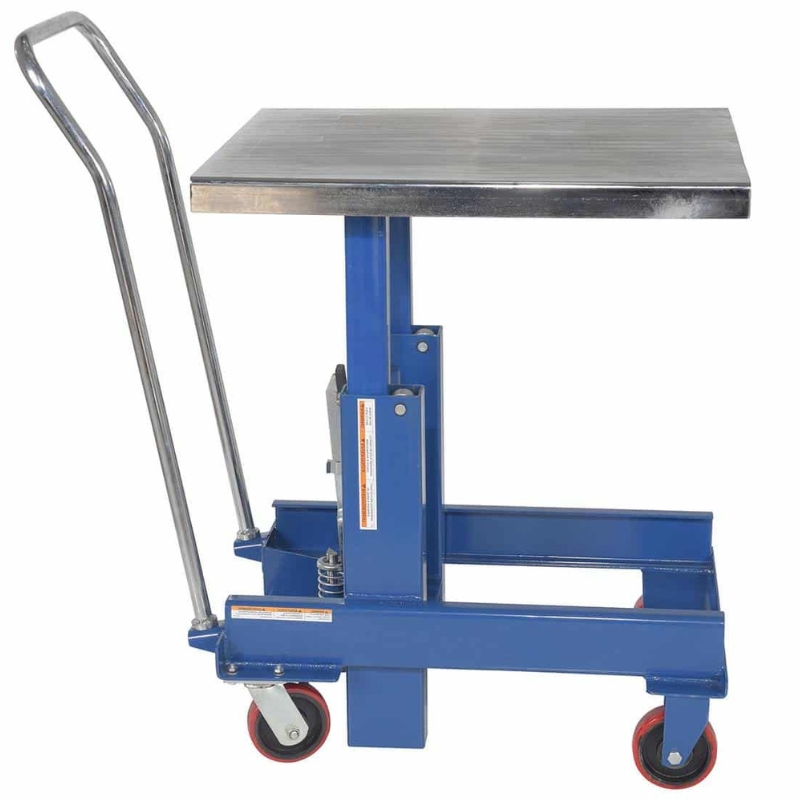
Lift Tables
- Function and Purpose: Lift tables allow workers to raise items to a comfortable height, reducing strain.
- Key Benefits: They minimize the need for bending and reaching, improving both productivity and safety.
- Practical Considerations: Check load capacity and lift range to ensure the table meets your needs.
Tips for Selecting the Right Equipment for Small Businesses
- Budget Considerations: Prioritize essential tools and explore financing options. Start small, adding more tools as your business grows.
- Space Constraints: Choose compact, multi-functional tools. Foldable or stackable options are ideal for conserving space.
- Scalability: Opt for equipment that can adapt to future growth, ensuring it remains useful as your business evolves.
Maintenance and Safety Tips for Material Handling Equipment
Importance of Regular Maintenance
Scheduled maintenance can prevent unexpected breakdowns, ensuring your equipment remains reliable over time.
Training Employees
Equip employees with proper training for safe equipment use, helping to prevent accidents and maintain an efficient, safe workplace.
Conclusion
Investing in quality material handling equipment is a smart decision that can transform your small business operations. Start with essential tools, then scale up as needed to enhance productivity, improve safety, and boost cost efficiency.